
There is No Modern Future
Retrofuturism, Alt-History, and the Cultural Death of Tomorrow

What is a “modern future?” Surely, the future, by nature of it not being contemporary, cannot be “modern.”1 A modern future is one that could, clearly, extend directly from our current state of being. It is a future that is rooted in the realities of modernity, in one way or another. When I say, “there is no modern future,” I do not, necessarily, refer to the End of History in an eschatological sense - history never truly ends, even if humans are no longer there to experience and construct it - I instead refer to the presentation of the future in culture. Our “cultural memory” of that which has yet to come to pass. When is the last time that you saw, read, watched, or even brushed past a science fiction story that seemed like it could conceivably derive from our current world? For me, it’s been a long damn time.
I came to this realization while scrolling through Millmint, a website that hosts a very interesting alt-history, sci-fi worldbuilding project centered around the fictional pan-Atlantic nation of Vekllei. The “present day” of the setting is the mid 21st century, but the point of divergence2 is 6000 BCE, when human settlers come to what we know of as Iceland (Oslola in setting terminology). In our timeline, Iceland was not meaningfully settled until the 9th century CE, at the earliest, by Viking explorers and traders, for whom it was something of a distant outpost.3 I recommend spending some time scrolling around the website if you haven’t before, the art and worldbuilding are both very interesting. However, as you do so, it will also become increasingly clear, very quickly, how un-modern this setting is.
Hobart, the creator, does not seek to hide this and is not claiming to represent a “modern” future; he declares, in no uncertain terms, that Vekllei is a “love letter to midcentury visions of optimism, nostalgia, and a changing world.”4 The setting’s utopian principles - the nation of Vekllei, at least, is explicitly meant to be read as utopic, if not wholly utopian - are Esperanto internationalism, a particular brand of mid-century, bureaucratic, Nordicesque socialism, and anarchist political theory. Tech is advanced, but not “modern.” Computers are still large and clunky and there are no handheld cellular phones, but multiple nations maintain active settlements on the Lunar surface.
Vekllei is not a modern future. Even ignoring the 6000 BCE POD, it is, at its most recent, a 1990s future by its tech level. Vekllei, a personal project undertaken by a single person, could easily just be the product of that individual’s particular obsessions, and I do think that’s true, but it is situated within a broader cultural landscape. On the complete opposite end of the spectrum of scale and purpose, Starfield, a massive, highly-developed, commercial game with a setting designed to make money from a large audience of players, was described as “NASApunk” by Todd Howard. He basically made up this term, and it’s vaguely analogous with “cassette futurism,” in which futuristic aesthetics draw from a vaguely 1970s-1990s era of technology. Here are two pieces of media, radically different in their size, the number of people working on them, and the purpose of their creation, and both of them have landed on, almost eerily, the exact same time period as artistic inspiration. These two projects aren’t alone. Raised by Wolves, one of the greatest to ever do it, RIP, HBO one day I will make you pay for cancelling this show, has nary a cellular device to be found. Its own worldbuilding also includes a massive, Earth-spanning war between atheists and Mithraists, a literal Roman-era mystery cult who were, in real life, basically eradicated by Christianity. It is a deeply un-modern future.
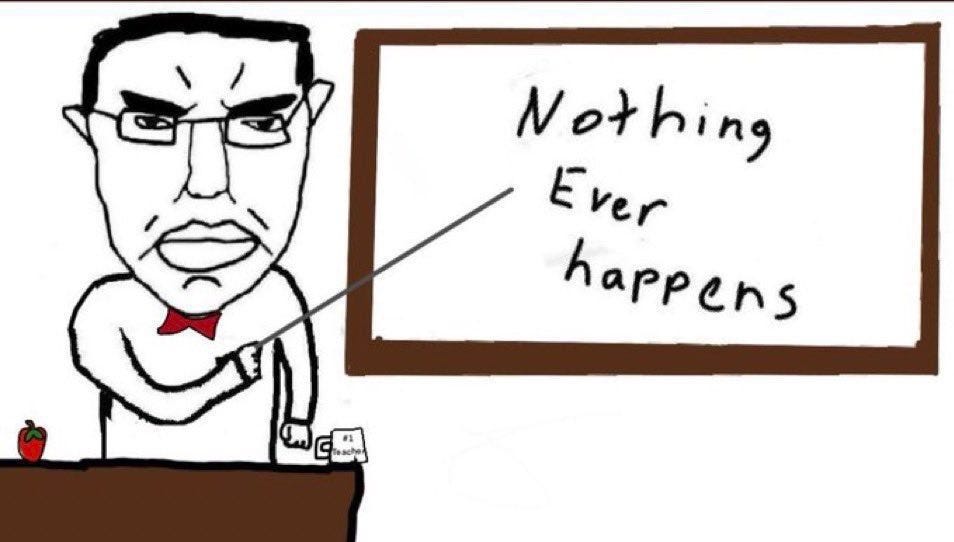
There are some exceptions - Made for Love, a really good (also cancelled, curses be upon ye all who hath crossed me) comedy about a woman escaping a controlling marriage with a tech billionaire, and The Creator, a heavily derivative but somewhat fun romp, both feature cell phones - but they merely prove the rule. Some of this issue can be chalked up to the fact that, these days, most sci-fi projects are pieces of long-running IPs. Star Wars is forever locked in the vague technological level of the 70s, the same for Star Trek and its glittering viewscreens and 60s jumpsuits. But when these works were originally made, they were modern, or at least modern-adjacent, futures. We scoff at the cable news and paper newspapers in Babylon 5, because we know, now, that everyone gets their news from fucking twitter, or facebook, or whatsapp, or some other bullshit on their phone, and paper newspapers barely exist. But when they made Babylon 5, those were the marks of a modern future - of a future that meaningfully extended from their own time. In contrast, the unifying stylistic choice of contemporary science fiction is retrofuturism. A rejection of the idea that a future might extend from the now. And all of this is to say nothing of the popularity of the “nothing ever happens” chudjack meme.5
Why is that? What happened? When did we lose the future?
The Problem with Modernity
There are a number of possible reasons for our sci-fi slowly acquiring the tenor of a period piece, some suggested above. The first is quite obvious - when much of the modern landscape of sci-fi is dominated with remakes, sequels, and new stories told in existing IPs, some of which are over half a century old, the tech starts to all look a bit retro. The popularity of this style, almost overwhelming, seeps into other projects, even those not directly referencing or inspired by them. Star Wars, Star Trek, and Alien are cultural giants, benchmarks against which all culture has come to relate itself. A whole slew of shows, some of which are quite good, could be easily described as Star Trek-alikes.6 The cultural power of Star Wars is so great that it remade the landscape of Hollywood entirely.
This reasoning, perhaps, explains some part of the Starfields, the big, mass-market productions, but not the Veklleis. When one is trying to sell a product, one looks to what has sold well in the past. Big, clunky viewscreens have been selling great since 1977. Why fix what’s not broken? But think, how many times have you heard the words “retrofuturist aesthetic” in someone’s homebrew sci-fi worldbuilding project? These people might be making those choices, on some level, because of the gravitational pull of the giants, but surely that can’t account for anything.
We construct narratives about time, and the problem with modernity is that these narratives are beginning to collapse in on themselves in our present moment. In Karl Mannheim’s Ideology in Utopia,7 he outlines four basic time ideologies: liberal, conservative, revolutionary, and apocalyptic. The liberal time-consciousness is embodied in idea that the arc of history bends towards justice, that things will inevitably get better over time, though perhaps with sputtering starts and stops. The conservative time-consciousness argues the opposite - that history is a march of worsening conditions. It’s important to note that while these outlooks often align with the political and cultural movements that currently describe themselves as liberal and conservative in the modern world, that isn’t always the case. Environmentalism, a decidedly left-wing ideology, contains within it a strong current of small-c conservative time-consciousness, an idea that the state of the natural world has, at least since industrialization and possibly since agriculture, been in a state of human-engineered decline. On the other hand, the modern AI/crypto/NFT techbro, a figure so attached to reactionary politics that it is now latched to the Trump administration as an almost parasitic body, has an objectively positive view of technological development and a clear sense of historical progressivism. Trump himself, who ran in 2016 on a traditional conservative platitude to “make America great again,” hearkening back to a lost and supposedly better era, now proudly declares that United States of America is in its Golden Age, that it has never been greater than it is now - what could be described as a “liberal” time-consciousness. For the last century or so, these two outlooks have dominated the Western world.8 Now, however, by every measure, they no longer ring true to the average person. Who could look at the looming threat of climate change and assume that everything will simply keep getting better? Who could, in the same vein, look back at a time before large-scale water purification, the civil rights movement, penicillin, and the eradication of polio and say that they would truly prefer to live in that world?
These two ideologies are comforting in their simplicity. They are lines up or down, without the scary geometric or trigonometric names. To lose them is to lose that comfort. We are left, then, with the revolutionary and apocalyptic views. The first claims that time will continue without progression until the revolution comes, and then there will be a rapid uptick in quality of life in its direct aftermath, asymptotically approaching a perfect world. The second claims that time will continue without meaningful progression, getting neither meaningfully better nor worse, until the day it ends, after which time will no longer exist in a meaningful sense. The Kingdom of Heaven will be at hand, unending and eternal. In many ways, these mindsets are one and the same, and I will be treating them as such. The apocalyptic mindset is, notably, much older than either its liberal or conservative siblings. They were born, at earliest, in the mid-to-late 17th century, more likely during the “Enlightenment” era of the 18th. Apocalypticism, in one form or another, is as old as history itself. After all, what kind of story doesn’t have an end?
The problem with the apocalypse is that we are a considerably less religious culture than we were at, for example, the turn of the first millennium CE, when people from across Latin Europe believed that the coming of the year 1000 heralded the Second Coming. Significantly less normal people now truly believe in an end of days, even those who are actively religious, but, in the absence of either the liberal or conservative time-consciousness to fall back on, they return to a version of apocalypticism, the “default” time-consciousness for almost all of human history. It is, however, an apocalypticism without an apocalypse, an eschatology bereft of the eschaton. A world in which, to repeat the words of the esteemed Dr. Chudde Jacke, “nothing ever happens.” We cannot imagine a modern future because we cannot imagine a world related to this one that gets better, or even truly one that gets meaningfully worse. There is no science fiction future or post-apocalyptic wasteland, there is just right now, forever. Maybe it gets hotter. Maybe they change the current minimalist corporate logos to something else to better suit the times, but, functionally, it’s still the same bullshit doomscrolling hellscape. There is such a deep, ancient, primal horror to this idea, a feeling that sits in the pit of one’s stomach. The peasants looking at the castles of his lords might’ve held the same pit in theirs - the fear that in 20 generations their descendants would toil the same fields for the descendants of the same man. And they, at least, had the comfort of the eschaton! Even as the Roman Empire crumbled around them, of the great thinkers and writers of the 4th and 5th centuries, only St. Augustine had the foresight to conceive of a world in which it did not exist. The slaves toiling in the fields and mines to support the lifestyles of these powerful men must have felt much the same. Looking between one another, they must have thought, almost with one mind, with an unspoken terror, “Is it really going to be like this forever? Can’t we do something, for god’s sake?”
Can’t we do something, for god’s sake?
A short answer is “yes.” The long answer is much thornier.
The human mind is a machine that makes narrative. We make narratives without even meaning to, without even knowing we have made them. It is comfortable to be in a narrative - we construct them about our own lives, the historical moments we find ourselves in, about anything given enough time and ability to think on the matter. There is a dread both at the idea of a story without end, an unchanging status quo, and the idea that our story might end in a way we cannot control or predict, or that it might end at all, for that matter. One way people have attempted to regain control over this narrative is to reimpose an eschaton. Evangelical Christianity was the first to hit on this winning strategy in the 20th century. QAnon was, until recently, probably the most influential 21st-century apocalyptic socio-political movement, but has quickly been replaced by the cult of AI.9 In the face of a present with no perceivable, or understandable, future, it is comforting to reimpose an end on the narrative. This new eschatology is the path of least resistance out of our current predicament, one that many have already taken. It is also a path that leads nowhere but disappointment. The end is not coming, JFK Jr. will not rise from the dead, AGI super-intelligence overlords will never exist as AI boosters conceive of them, no Christian apocalyptic calculation has ever been (or will ever be) correct, the 12th Imam has not returned, the Maitreya Buddha is nowhere to be found, King Arthur is still sleeping under his mountain, and Biblical scholars overwhelmingly view the events of the Book of Revelation as a metaphorical commentary on the persecutions of the Roman Empire rather than a blueprint for events meant to occur in the real world. The closest thing we will likely ever see to a “correct” apocalyptic prediction is that of climate change, and it will not come as the sudden and horrible moment at the end of time, the last fall of a heavy curtain over the stage. It will be slow, and it is likely that someone (or, at least, something) will come out the other end. History will not end even if we are not there to perceive it. I’d rather be there.
We are left, then, with the present, and the fact that we have no choice but to make some kind of future out of it. I will quote the words of Ursula K. Le Guin on this matter, who was a better and more intelligent writer than I, “We live in capitalism, its power seems inescapable — but then, so did the divine right of kings. Any human power can be resisted and changed by human beings.”10 When St. Augustine died in 430, he was one of the few literate people of his age who believed Rome would - could - ever fall. In less than 50 years, the the Ostrogothic king Odoacer deposed Romulus Augustus, the last emperor of Western Rome. A system of imperial extraction at least as old as the First Punic War, over 600 years of pillage, slavery, and death, ended. Was what came after better? Maybe, maybe not. It was different. It was, for them, the future. It happened. It can happen again.
Among those who took part in overthrowing Rome were the Bagaudae,11 which likely translates as “fighters” or “warriors” from the Gallic language. Most of their revolts occurred in what is now northeastern France and Belgium, though they spread across the provinces of Roman Gaul. The Roman Empire classified them as bandits, and, with their Germanic and Indo-Iranian allies, put down a number of their revolts over the course of the 5th century, most notably in 409-417 and 435-441.12 We know little for sure of their composition or motives, but we do know that they were mostly lower-class rebels - free peasants, escaped slaves, legionary deserters, and outlaws of all other stripes - as well as some local elites, presumably those with anti-Roman politics. The word Bagauda was almost certainly a name the rebels gave themselves, the Romans would not have conjured an old Gallic word out of the mists of history. Indeed, few of their literate elites would have even considered that anyone was still speaking such an old, provincial, barbaric tongue. Julius Caesar conquered Gaul for the Roman Republic (soon to be an empire in its politics as well as its practice) in 50 BCE. Five centuries later, the people who rose against the empire he forced upon them used the language that empire had tried to eradicate to name themselves warriors. Perhaps the great thinkers of the Roman Empire could, almost universally, not imagine a world without it. The Bagaudae could.
The ugly, and perhaps comforting, truth is that history does not have a narrative except that which we impose upon it. There is no line going up, no line going down, no flat line, no asymptotical curve, and no end. Things get better as often as things get worse, and vice versa. The Bagaudae died in droves, but their children and grandchildren saw a world free of the empire which had, for centuries, sought to break their culture into pieces and put it back together in a new form like the mosaics so prized by the Roman Senators who profited off their suffering. These descendants also saw a world ravaged by violent raiding, the imposition of a new, but no less cruel, aristocratic order, and mass famine brought about by a collapse in their food supply. The Gallic language is dead, deader than the Latin which sought to replace it. No one will ever call themselves a Bagauda again. At least, no one will ever get the accent quite right. Even so, did they not still catch a glimpse of that world, free of the chains of empire, briefly, before they died?
I’m not asking you, dear reader, to fight and possibly die for your freedom like the Bagaudae did. I mean, I’m certainly not planning on it. I like being alive, generally, and I don’t consider myself much of a fighter, no matter which language you say it in. We just have to think like them. For a future to exist, we have to imagine it, to hold it on our minds. Even if we’re wrong about what it looks like, or what it’ll mean to get there, or what it’ll take, even if the picture is muddled or distant. History is always happening, it’s just that sometimes we can’t see it. Either we are too caught up in our own narratives of the world to see the tides turning beyond them, or too swaddled in the warm and crushing embrace of the imperial core to feel the turning of wheel of dharma. Despite his many accolades, Dr. Chudde Jacke is wrong. Things are happening. They will keep happening. History has no narrative but that which we make for it. Our enemies are already imagining a future. We aren’t in it. We will never beat them unless we do the same.13 They shouldn’t be in ours either.
See you in the future, my friends. Let's make it as good as we can.
EDIT: MillMint has written a response to this essay, which I think is very good and highly worth reading, find it HERE
For now, we are ignoring the thorny question of what “modern” itself means - a constant debate amongst academics, art critics, and all other brands of pedant such as myself.
Hereafter, POD, in traditional alt-hist fashion.
It is possible that a small group of Irish monks made their way to the island before even the Vikings. Scandinavian Christian records describe them, confirmed by recent archeological findings.
https://millmint.net/intro/
The chudjak has begun to lose some of his luster since the beginning of the second Trump term, but he lives on despite it.
Farscape, Stargate, Babylon 5, etc.
Which I have not read, so will not cite, but have had explained to me by someone I trust (thanks Oro).
By which I refer to the US and NATO aligned countries outside the Warsaw Pact, as well as some 3rd-world (in the Cold War sense, meaning nonaligned) nations.

https://www.ursulakleguin.com/nbf-medal
Bagauda in the singular.
The first historical references we have for them come from much earlier - a rebellion in 284-296 CE put down by Diocletian, infamous for his persecutions against Christians.
And yeah, that means we might have to write some sci-fi with cell phones in it. Or at least try to figure out what’s going to replace them.